
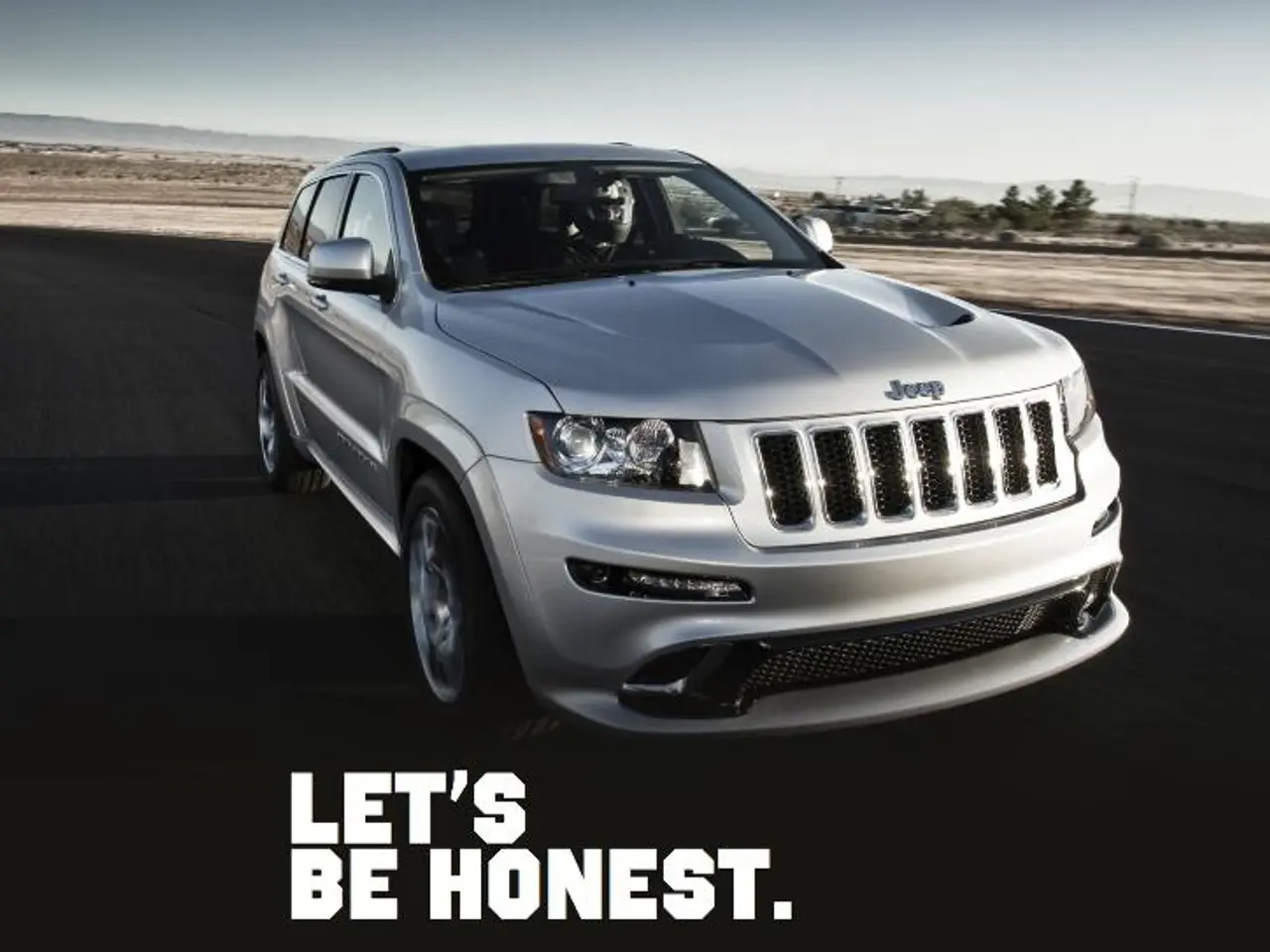
Electric automobiles powered by batteries see unprecedented growth in sales and market share within the Australian automotive industry.
In the heart of 2025, Australia's automotive landscape is undergoing a significant transformation, with Medium SUVs continuing to lead new light vehicle sales, accounting for 24.55% of the market. However, the spotlight is shifting towards electric vehicles (EVs) and hybrids, as they carve out a growing presence [1][4].
Battery Electric Vehicles (BEVs) are making a strong and growing impact, capturing over 10% of new car sales in June 2025, a significant leap from previous periods. This record-breaking month saw over 13,000 BEVs sold, with popular models such as the Tesla Model Y, BYD Sealion 7, and Tesla Model 3 leading the charge [1]. Plug-in Hybrid Electric Vehicles (PHEVs) also saw rapid growth, accounting for an additional 6,200 vehicles sold in June [1]. Together, plug-in vehicles reached about 15.2% market share in that month [1].
However, July 2025 showed some stalling in pure BEV sales, dropping below 8% of new vehicles sold across Australia, with BEVs comprising about 6.9% of the market. This dip was partially offset by a surge in PHEV sales, which grew rapidly, up 81-183% year to date depending on source [2][4]. This indicates that hybrids and plug-in hybrids are currently playing an important role as a transitional technology, particularly for Australians needing flexibility or with limited charging access [2][4].
The rise of BYD is challenging Tesla's dominant position, with the Sealion 7 model outpacing Tesla's Model Y in July 2025 sales. Tesla's sales were down over 20% year-on-year, attributed to supply and shipping delays and production gaps, whereas BYD largely benefited from strong Chinese model availability and competitive pricing [1][5].
In Western Australia, BEVs accounted for about 7.6% of vehicles sold in the first half of 2025, with PHEVs at 4.2% and a slight dip in conventional hybrids. Industry experts expect continuing growth in EV and hybrid sales driven by expanding model availability, government incentives, and efficiency standards aimed at reducing emissions from new vehicles [3].
| Vehicle Type | Market Share / Trend (Mid-2025) | Notes | |----------------------|-----------------------------------------------|--------------------------------------------------------| | Battery Electric Vehicles (BEVs) | ~6.9%-10.3% of new car sales (variable monthly) | Rapid growth; record June share; flat/slight dip in July | | Plug-in Hybrid EVs (PHEVs) | ~4.2%-6%+; growing rapidly (up to 183% YTD) | Important transitional option; rising sales | | Internal Combustion Engine (ICE) Vehicles | Declining proportion as EVs/hybrids grow | Still significant share but losing ground | | Conventional Hybrids | Slightly declining (~13-14% share in WA) | More stable but less growth than plug-in variants |
The broader market trend is a strong shift toward electrification, supported by more models, supply improvements (except some Tesla interruptions), and government policies encouraging EV uptake. BEVs are gaining traction but PHEVs remain an important bridge technology in Australia's automotive market [1][2][3][4][5].
Notable developments include the drop in PHEV sales due to the end of Fringe Benefits Tax exemptions for the category on March 31, 2025. The BYD Shark 6 plug-in hybrid 4WD ute claimed nearly 47% of all PHEV sales in Q2 2025, and accounted for 9.24% of the 4WD ute segment in Q2 2025. The ICE market share edged down to 72.03% from 72.37% in Q2 2025, while five electric vehicle models travelled less than their official lab figures, according to independent tests [2][4].
Despite the BEV momentum, hybrids continue to outsell them overall, but the gap between the two technologies may be narrowing. The electric vehicle market in Australia reached a new high in the June 2025 quarter, with a 63.37% increase in BEV sales from Q1. Overall light vehicle sales increased by 10.42% to 314,185 in Q2 2025 [1][4].
The sharp increase in BEV share in Q2 2025 signals a potential turning point in Australia's evolving car market, as the country moves towards a more sustainable future. The AAA released a report following the launch of Australia's first independent real-world EV range tests, aiming to address range anxiety, a key barrier for potential EV buyers [3].
- The electric vehicles (EVs) industry, particularly Battery Electric Vehicles (BEVs), is experiencing significant growth in Australia, capturing over 10% of new car sales in June 2025.
- In the midst of this transformation, Plug-in Hybrid Electric Vehicles (PHEVs) are playing an important role as a transitional technology, with sales growing rapidly and accounting for about 6% of new vehicles sold in June 2025.
- Despite the strong growth of EVs, Internal Combustion Engine (ICE) vehicles still account for a significant share of the market, but their proportion is declining as EVs and hybrids gain momentum.
- As the electric-vehicles market continues to expand, driven by factors such as government incentives and efficiency standards, there's a potential turning point in Australia's car market, moving towards a more sustainable future.




