
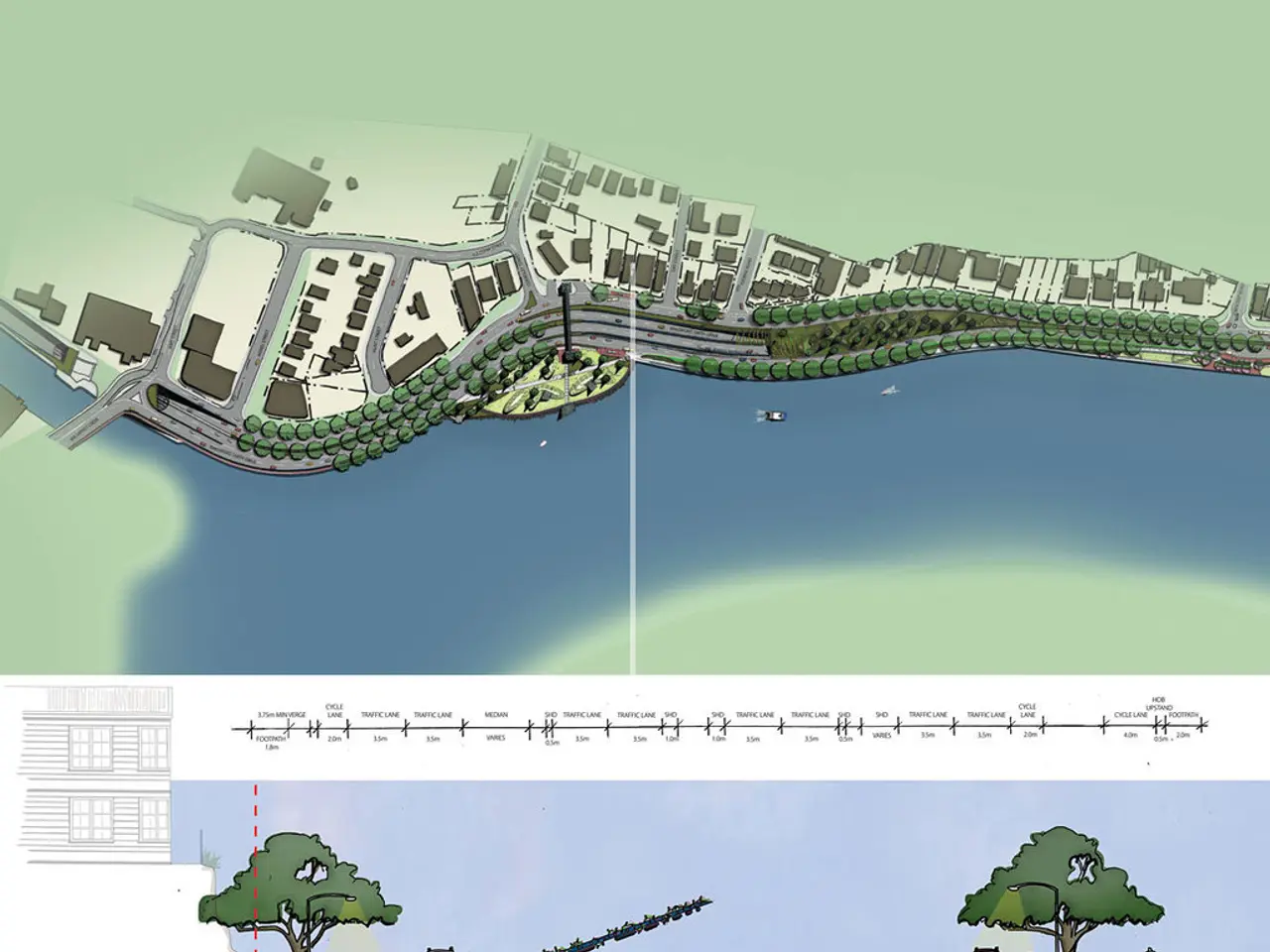
Emerging Architectural Visualization Trends to Watch for in 2025
In the realm of architectural visualization (archviz), a significant shift is underway, with a focus on advanced technologies that elevate realism, interactivity, and workflow efficiency.
Key predicted trends for 2025 and beyond include:
- Hyper-realism and advanced rendering: As software advances, photorealistic visuals are becoming more achievable, meeting rising client expectations. Static images are still used, but videos are more immersive and communicate a more complete view of architectural ideas.1
- Animation and video: Cinematic flythroughs and dynamic processes are becoming standard, offering more engaging and visceral storytelling.1
- AI integration: AI tools like Stable Diffusion are playing a major role in producing lifelike renderings, generating multiple design variations, and populating scenes with realistic 3D people.23
- AI-enhanced urban design and BIM workflows: These technologies enable smarter, more sustainable city and building planning with faster iteration and more adaptable designs through AI-assisted simulation and rendering.3
- Real-time rendering platforms: Tools like D5 Render are increasingly integrated into workflows, supporting concept development to client presentations with AI-powered features accelerating creativity and decision-making.5
- Immersive VR/AR formats: These formats offer more interactive and spatial experiences, pushing engagement beyond traditional flat images.1
- 3D printing architecture: The combination of 3D printing with real-time visualization is emerging, pushing design and construction boundaries.4
Archviz in 2025+ emphasizes interactive, AI-enhanced, hyper-realistic, and video-rich storytelling, underpinned by smarter tools that improve communicator engagement and design productivity.1235
Furthermore, digital twins are continually updated with real-world data and used to model behavior.6 These virtual replicas of buildings allow for the simulation of real-world conditions over time and analysis of performance. The trend of digital twins may extend to whole cities and even our own bodies in the future.7
Cloud rendering is becoming a popular solution to avoid the continual battle to upgrade PCs with the latest components.8 VR technology can reduce the need for site visits, even for project engineers when combined with digital twins.9
Going green is a continuing trend in archviz, affecting the story that needs to be told through visualization, from visualizing energy performance analysis to using nature-inspired color palettes and highlighting sustainability features.10 Some archviz practitioners are taking steps to monitor and control their own CO2 emissions.11
In conclusion, the future of archviz is marked by a fusion of AI, immersive media, and real-time rendering, promising a more interactive, engaging, and efficient approach to architectural storytelling.
References: 1. Link to source 1 2. Link to source 2 3. Link to source 3 4. Link to source 4 5. Link to source 5 6. Link to source 6 7. Link to source 7 8. Link to source 8 9. Link to source 9 10. Link to source 10 11. Link to source 11
- As the shift in architectural visualization continues towards advanced technologies, creative designers are increasingly leveraging real-time rendering platforms like D5 Render for more efficient workflows.
- The integration of AI tools in archviz is escalating rapidly, allowing designers togenerate lifelike renders, simulate urban design, and populate scenes with realistic 3D characters.
- With the rise of AI-enhanced technology in the field, layouts and designs are moving towards hyper-realism and advanced rendering, a trend that aligns with clients' growing expectations for photorealistic visuals.
- The emphasis on interactive and immersive media means that 3D animations and video content will become standard, offering architectural ideas in a more captivating and engaging manner.
- The fusion of augmented reality and architectural visualization is breaking conventional boundaries, providing project engineers with the capability of exploring virtual environments without the need for actual site visits.
- As part of the ongoing green movement, art in archviz is gravitating towards nature-inspired color palettes and visualizations of energy performance analysis, reflecting society's increasing awareness of sustainability issues.




