
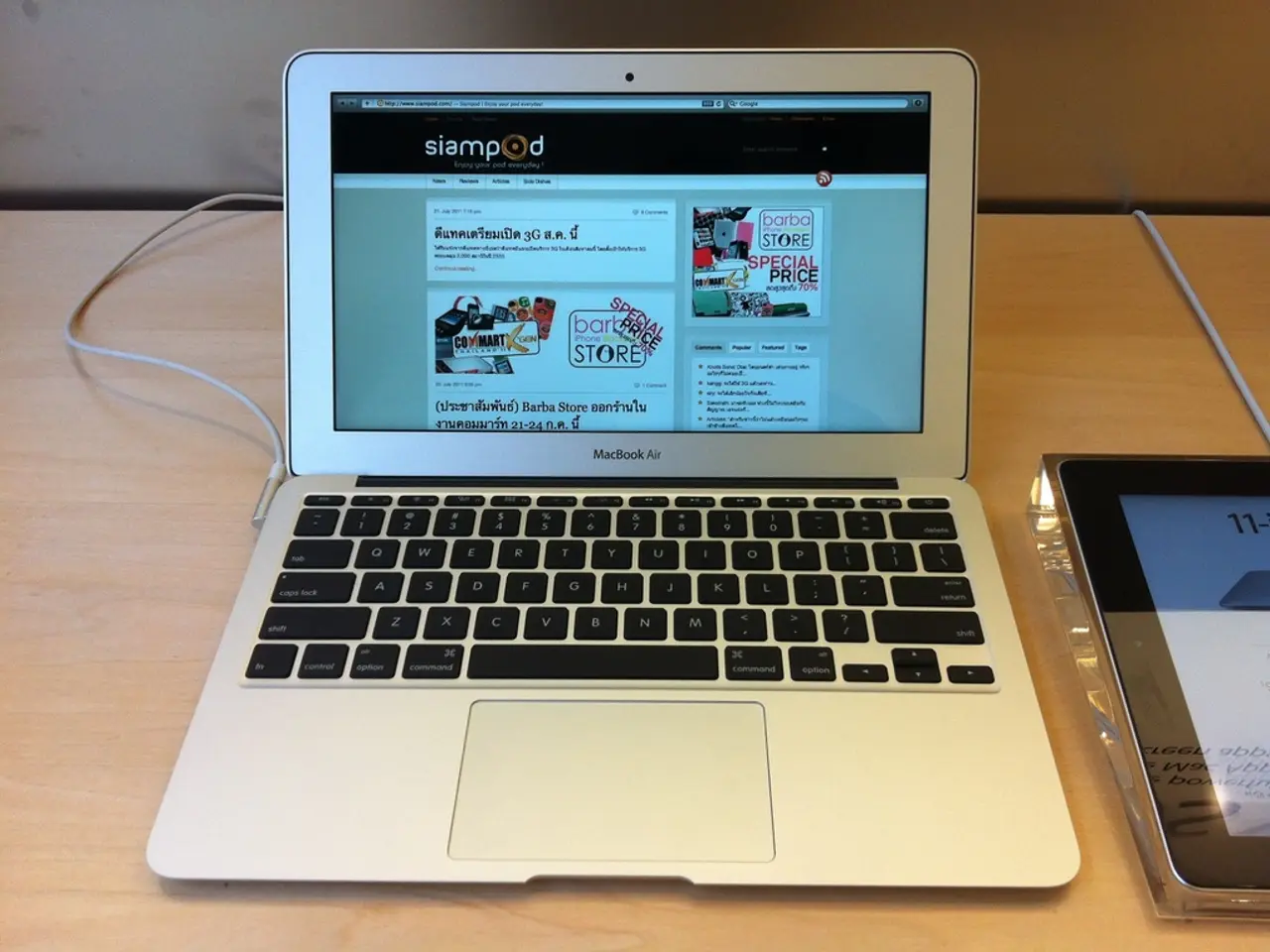
Examination of Laptops versus Touch-Screen PCs in Web Browsing Contexts
In a recent study conducted at UC Santa Barbara, it has been revealed that laptops with traditional input methods (keyboard and mouse) may be more effective than touch-screen computers for web-based information searches.
The research, which involved thirty-six participants, found that participants who used laptops outperformed those who used touch-screen PCs in terms of web search efficiency. Participants who used laptops bookmarked more relevant webpages and retrieved more relevant elements during the search process.
One of the primary reasons for touch-screen devices being less effective is input precision. Touchscreens can be less precise than a mouse and keyboard for selecting links, typing search queries, and interacting with detailed web page elements or multiple windows. This leads to slower and more error-prone searching.
Another factor is screen size and layout. Laptops typically have larger displays and layouts optimized for multitasking and viewing multiple pieces of information simultaneously, while touchscreen devices (especially tablets and phones) tend to have smaller screens that require more scrolling and zooming, which can impede efficient search.
The user experience on touchscreens may also be less conducive to rapid, detailed web searches due to interface optimization. Although many websites now adapt layouts dynamically for touch and small screens, the overall experience may still be less efficient than on laptops.
However, recent touchscreen laptops, like the HP Chromebook x360 14c, can offer solid web-based task performance and portability, as they combine traditional keyboard/mouse inputs with touch capabilities, mitigating some of the shortcomings of pure touchscreen devices.
Cognitive load measurements further support the conclusion that using a touch-screen PC requires more mental effort than using a laptop. The study revealed significant differences in EEG-based cognitive load indices between laptop and touch-screen PC users, and participants who used touch-screen PCs spent more time on each webpage than those who used laptops.
In conclusion, while touch screens add convenience and portability, for complex or extended web-based information searches, laptops with traditional inputs remain more effective due to input precision, larger screen size, and optimized user interfaces. The study suggests that touch-screen computers may not be suitable for all computing needs.
Smart-home devices with gadgets offering touchscreens can still encounter issues similar to those seen on touch-screen computers, such as lower precision in input, smaller screen size, and less efficient user interfaces, potentially hindering their effectiveness in performing complex tasks.
Despite the advancements in technology, laptops, equipped with conventional gadgets like mouse and keyboard, generally offer a superior experience for web searches due to improved precision, larger screens, and optimized interfaces, making them more suitable for extended, detailed information searches.




