
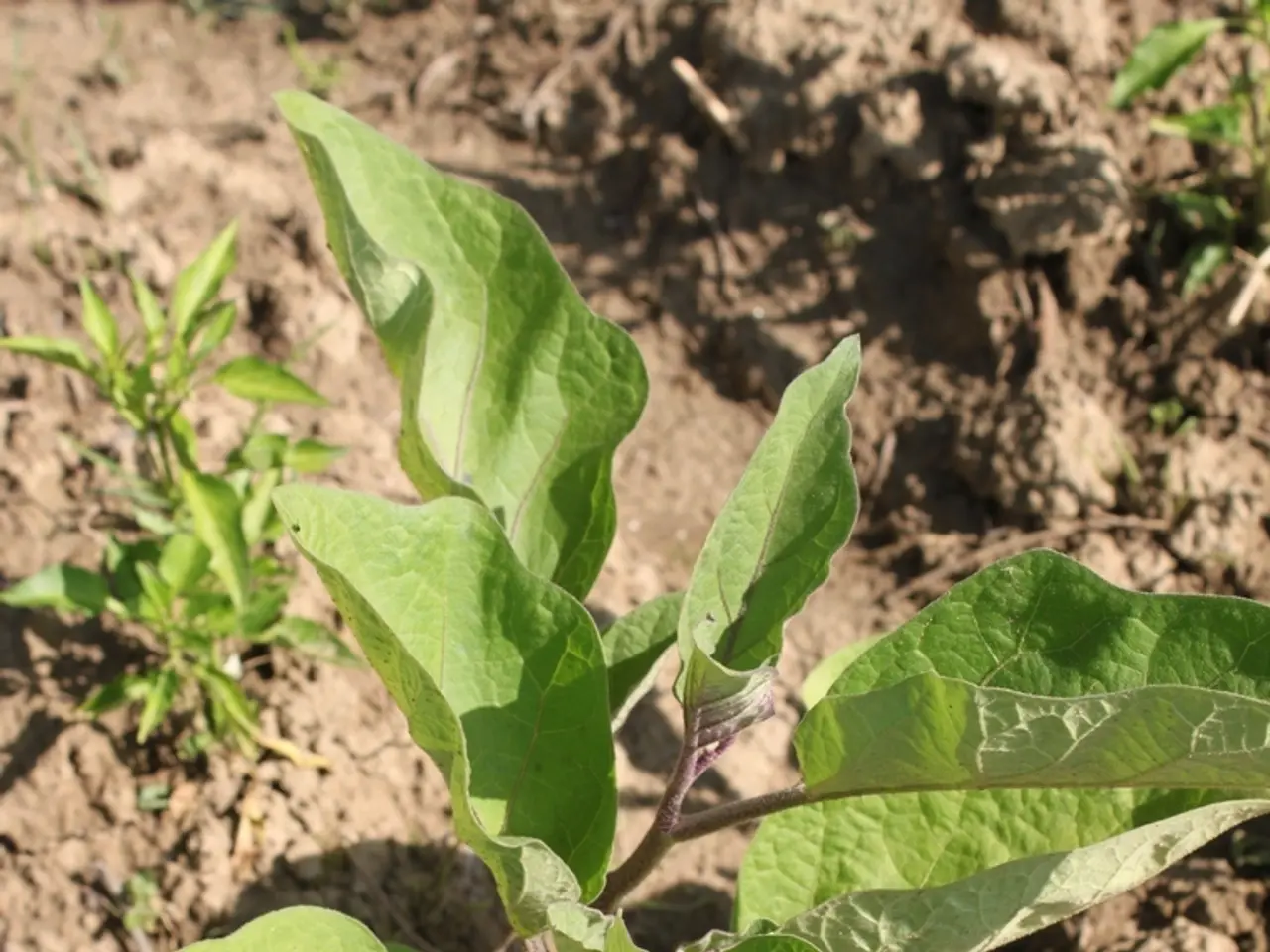
Mars Agriculture Insights: Lessons Learned from Arid Earth Soils
In the quest to make Mars a habitable planet, a significant focus has been placed on the development of sustainable farming systems. The Martian environment presents unique challenges, with nutrient-poor soil and harsh conditions, but recent research suggests that we can draw inspiration from Earth's dryland farming techniques to overcome these obstacles.
Microorganisms play an essential role in maintaining soil health on Mars, forming microbial symbiosis with plant roots to help plants access nutrients and water more efficiently. Understanding the soil microbiome of native plants offers insights into fostering beneficial microbial communities that support plant growth under extreme conditions.
Long-term soil amendments in Martian environments will enhance soil stability and nutrient retention, vital for sustainable farming. This can be achieved by amending the soil with organic waste recycled from human habitats, microbes or fungi that can improve soil fertility, and possibly adding bioengineered plants or microorganisms adapted to drought and poor soils to enhance nutrient cycling.
Implementing soil conservation and erosion control techniques is essential for maintaining productive farmland on Mars, preventing soil loss, and improving soil structure and nutrient retention. Erosion risks are high in Martian soil cultivation systems, making soil stabilization essential to prevent erosion and maintain soil stability.
Understanding how atmospheric moisture and radiation exposure affect soil health helps in designing effective strategies for farming on Mars. For instance, Martian farms would need to maximize limited water supplies using techniques such as moisture retention, minimal irrigation, and water recycling systems built into habitats to reuse water from plant transpiration and human activities.
Controlled environment agriculture will be crucial for Martian farms, as they would rely heavily on sealed, pressurized greenhouses or growth chambers to manage extreme temperatures, dust, low pressure, and radiation. These environments would incorporate water and nutrient-conserving practices from dryland systems within these controlled setups.
Employing drought-tolerant, nutrient-efficient crops or genetically improved plants with traits derived from molecular breeding strategies used in Earth dryland farming can improve yields under Mars-like conditions. Indigenous and local farming practices offer valuable lessons for sustainable agriculture on Mars, emphasizing crop diversity, crop rotation, organic amendments, and healthy soil microbiomes.
It's unlikely that indigenous techniques can be fully adapted for Mars, but they can offer valuable insights for sustainable farming on the planet. Adapting Earth-based soil development strategies is essential for creating viable agricultural environments on Mars, focusing on enhancing soil microbial diversity, introducing organic matter, and improving soil structure and nutrient availability.
In sum, combining dryland farming water and nutrient conservation principles with closed environmental systems, microbial soil enhancement, waste recycling, and advanced crop genetics provides a pathway to sustainable Martian agriculture despite the hostile and nutrient-poor soil conditions on Mars.
[1] Martian Agriculture: The Future of Food Production on Mars. (2021). [online] Available at: https://www.nasa.gov/feature/martian-agriculture-the-future-of-food-production-on-mars
[2] Mars Agriculture: Challenges and Opportunities. (2019). [online] Available at: https://www.ncbi.nlm.nih.gov/pmc/articles/PMC6550762/
[3] Terrestrial Analogues for Martian Agriculture: Insights from Dryland Farming. (2020). [online] Available at: https://www.nature.com/articles/s41550-020-1182-y
Science plays a significant role in the development of sustainable farming systems on Mars, with researchers drawing inspiration from Earth's dryland farming techniques to overcome the unique challenges posed by the Martian environment. The convergence of environmental-science, space-and-astronomy, technology, and possibly even biology through bioengineered plants or microorganisms adapted to drought and poor soils could pave the way for environmental conservation efforts in Martian agriculture.




