
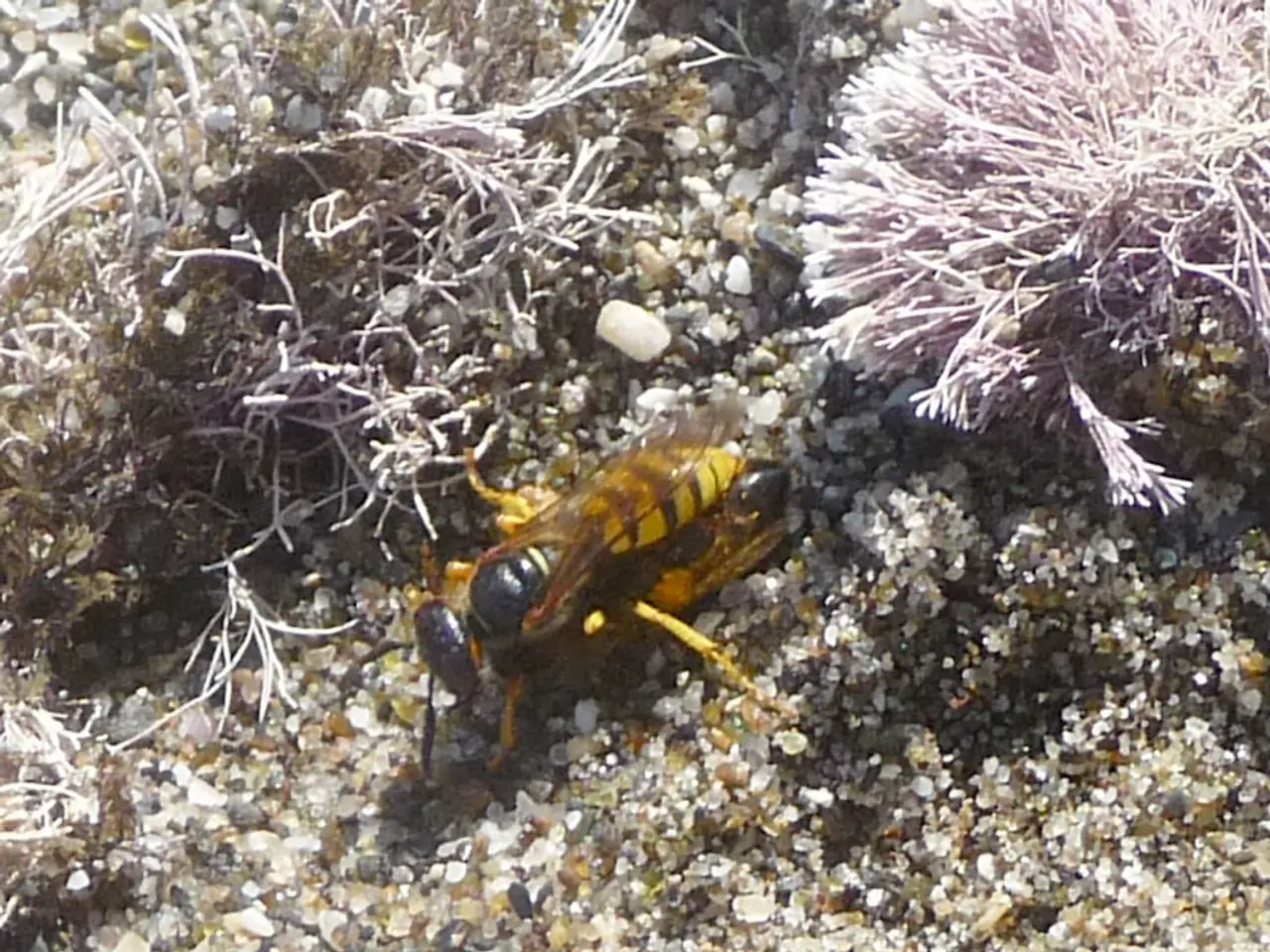
Nests of radioactive wasps discovered near a former nuclear weapons manufacturing facility
A series of radioactive wasp nests were recently discovered at the Savannah River Site (SRS) in South Carolina, a facility that was once used for producing parts for nuclear weapons. The wasps' nests were found near tanks storing liquid nuclear waste within the F Tank Farm area, where residual radioactive contamination remains despite no active leaks currently occurring.
The first radioactive wasp nest was found on July 3, exhibiting radiation levels 10 times above federal regulatory limits. Since then, three more nests have been discovered, all in the same area. The nests emitted less than 1% of the natural background radiation that humans experience daily, posing no threat to the workforce, public, or the environment.
The wasps likely came into contact with contamination on posts or surface materials near these storage tanks when constructing their nests. Different types of wasps may use dirt or wood fibers, which could absorb or pick up radioactive particles present on-site.
The detected radioactive contamination in the nests and wasps was low, with no evidence of ongoing leakage from waste tanks. The nests were treated as radioactive waste once discovered, sprayed with insecticide, removed, and properly disposed of.
The SRS statement emphasizes that although infrequent, minor levels of contamination can occur outside of the controlled work areas, but they are at levels far below what would cause human health issues.
The discovery has raised concerns and questions about how residual contamination spreads in the environment and the importance of monitoring all wildlife and insect vectors at legacy nuclear sites. The SRS, which covers 310 square miles and retains contamination in certain areas due to its legacy from Cold War-era nuclear activities, is committed to continuous monitoring to facilitate early detection and management of potential contamination.
It is unlikely for radioactive wasp nests to be made outside of the Savannah River Site because wasps won't have access to radioactive material elsewhere. However, climate change could potentially unearth or disturb Cold War-era nuclear waste buried by the US, according to officials. This underscores the importance of maintaining vigilance and proper management of nuclear waste sites.
For reference, the average person receives about 620 millirems total per year from both natural and manmade sources of radiation. A medical CT scan exposes the subject to between 200 and 1,000 millirems of radiation depending on the length and body location of the scan, according to the U.S. Environmental Protection Agency.
[1] Savannah River Nuclear Solutions, Inc. (2021). Radioactive Wasp Nests Discovered at Savannah River Site. Retrieved from https://www.savannahriverremediation.com/news/2021/07/radioactive-wasps-discovered-at-savannah-river-site
[2] Department of Energy (2021). Background Radiation. Retrieved from https://www.energy.gov/science-innovation/our-scientific-research/basic-research/fundamental-physics/background-radiation
[3] U.S. Environmental Protection Agency (2021). Radiation Exposure from Medical Imaging. Retrieved from https://www.epa.gov/radiation/radiation-exposure-medical-imaging
[4] Savannah River Site (n.d.). About SRS. Retrieved from https://www.savannahriversite.com/about-srs
- The discovery of radioactive wasp nests at the Savannah River Site (SRS) raises questions about the spread of residual contamination in the environment, particularly at legacy nuclear sites.
- Despite the recent findings, the nests found at the SRS did not pose a threat to human health, the workforce, or the environment, emitting less than 1% of the natural background radiation humans experience daily.
- The presence of these radioactive wasp nests at the SRS, located in South Carolina, highlights the importance of continuous environmental monitoring and proper management of nuclear waste sites, even in cases of infrequent contamination.
- Concerns about the potential impact of climate change on the containment of Cold War-era nuclear waste have been raised, as changes in climate could unearth or disturb buried waste, making proper site management vital.
- It is essential to understand the impact of radioactive contamination on medical conditions and the general public, considering that an average person receives about 620 millirems total per year from both natural and manmade sources of radiation, and a medical CT scan exposes the subject to between 200 and 1,000 millirems of radiation.




