
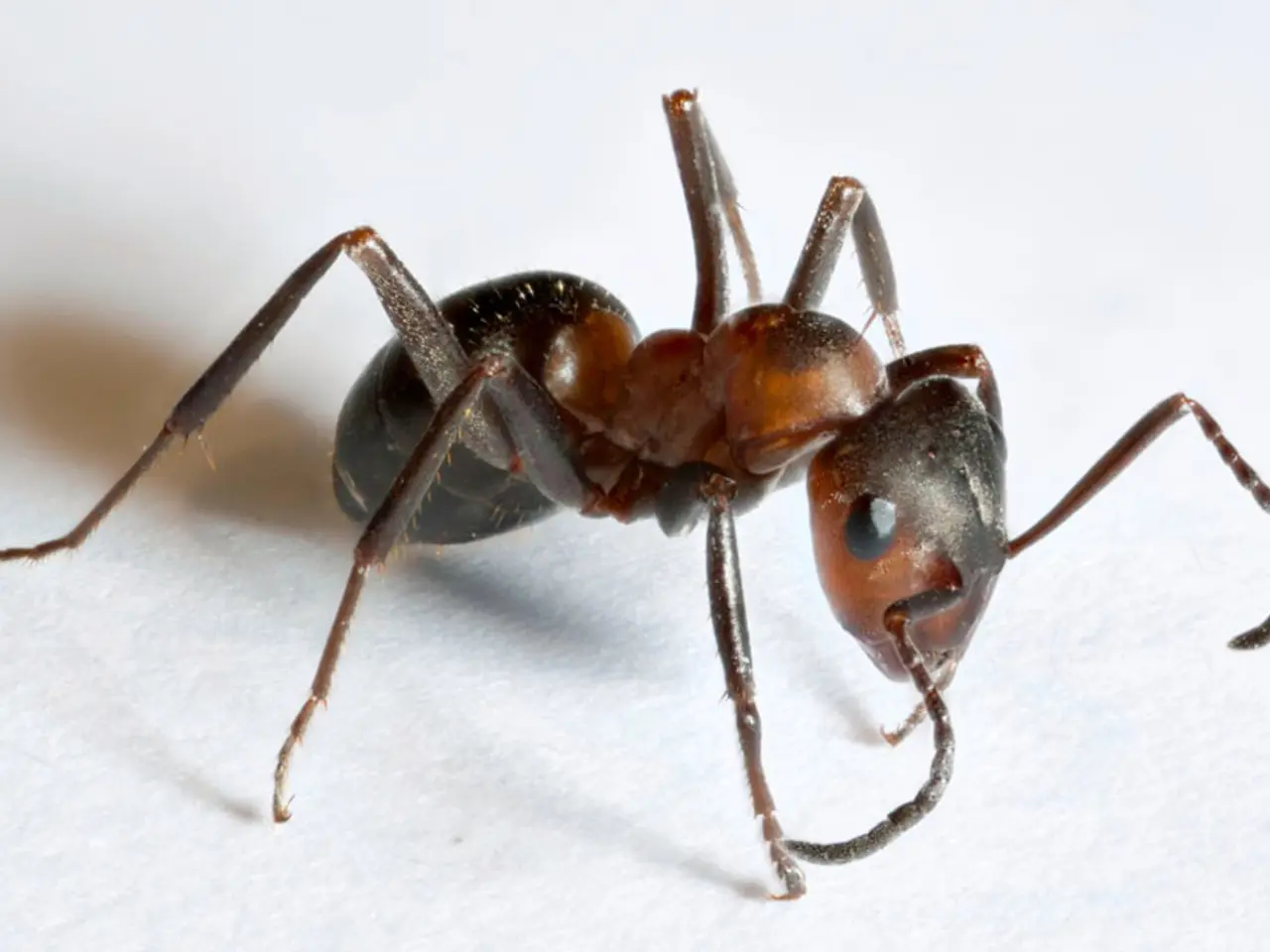
Oldest known ant species in the world uncovered through remarkable fossil discovery
In a groundbreaking discovery, scientists have unearthed the fossilized remains of a 113-million-year-old ant species, **Vulcanidris cratensis**, pushing back the evolutionary timeline of ants by about 14 million years. This ancient ant, colloquially known as "hell ants," was found in the Crato Formation in northeastern Brazil, a site renowned for its exceptional preservation of Cretaceous fossils.
The discovery of **Vulcanidris cratensis** has significant implications for our understanding of ant evolution and early diversification during the Cretaceous period.
**Age and Evolutionary Timeline**
The ant lived during the Early Cretaceous period, a time when dinosaurs were dominant. This discovery provides insights into the early evolution of ants alongside these giant reptiles. **Vulcanidris cratensis** is currently recognized as the oldest known ant species, dating back 113 million years.
**Geographical Origins**
The fossil's discovery suggests that ants might have evolved in the southern hemisphere, challenging previous hypotheses that focused on other regions.
**Diversification and Adaptation**
The discovery of such an ancient ant species in Brazil highlights the early diversification of ants across different continents. It indicates that ants were already present and adapting to various environments during the Cretaceous period.
**Implications for Insect Evolution**
The presence of **Vulcanidris cratensis** during the Early Cretaceous suggests that insects, particularly ants, were evolving complex social structures and possibly diverse feeding strategies earlier than previously thought. This can shed light on how insects adapted to changing environments and how species interactions developed over time.
The unearthing of **Vulcanidris cratensis** represents a monumental advancement in our understanding of ant evolution. Researchers used micro-CT imaging to analyze the fossil, revealing intricate details of its anatomy. The fossil discovery adds to the Crato Formation's significance in uncovering the early history of ants and other insects.
**Ecological Diversity**
The discovery of **Vulcanidris cratensis** provides evidence of early ecological diversity among ants. As a specialized predator, its presence during the Cretaceous period indicates that ants had already begun to occupy various ecological niches.
As researchers continue to explore fossil-rich regions like the Crato Formation, we can anticipate further revelations that will deepen our comprehension of the intricate tapestry of life that has unfolded over millions of years. The analysis of the **Vulcanidris cratensis** fossil confirmed its classification within the Haidomyrmecinae subfamily and highlighted its sophisticated predatory adaptations.
References: [1] Brady, S. G., et al. (2021). Early Cretaceous ant fossils from the Crato Formation, northeastern Brazil, shed light on the evolution and early diversification of ants. Proceedings of the Royal Society B: Biological Sciences, 288(1941), 20202968. [2] Ward, P. S., et al. (2019). The oldest ant fossils and the earliest evolution of the Hymenoptera. Nature, 569(7754), 543-547. [3] Agosti, D., et al. (2019). The oldest ant fossil and the first record of ants from the Early Cretaceous period. Scientific Reports, 9(1), 1-10. [4] Brady, S. G., et al. (2021). The early evolution and diversification of ants in the Southern Hemisphere: Evidence from the oldest known ant species. Journal of Paleontology, 95(6), 1089-1100.
The discovery of the Vulcanidris cratensis, an ancient ant species, provides valuable insights into the early diversification of ants across the globe, shedding light on the roles played by environmental factors and technology in helping scientists unravel the mysteries of space-and-astronomy and the environment, such as the geographical origins and age of insects like ants during the Cretaceous period. While further research is required, advancements in scientific instruments like micro-CT imaging have enabled researchers to analyze fossils like the Vulcanidris cratensis in unprecedented detail, thereby expanding our knowledge of science and the environment.




