
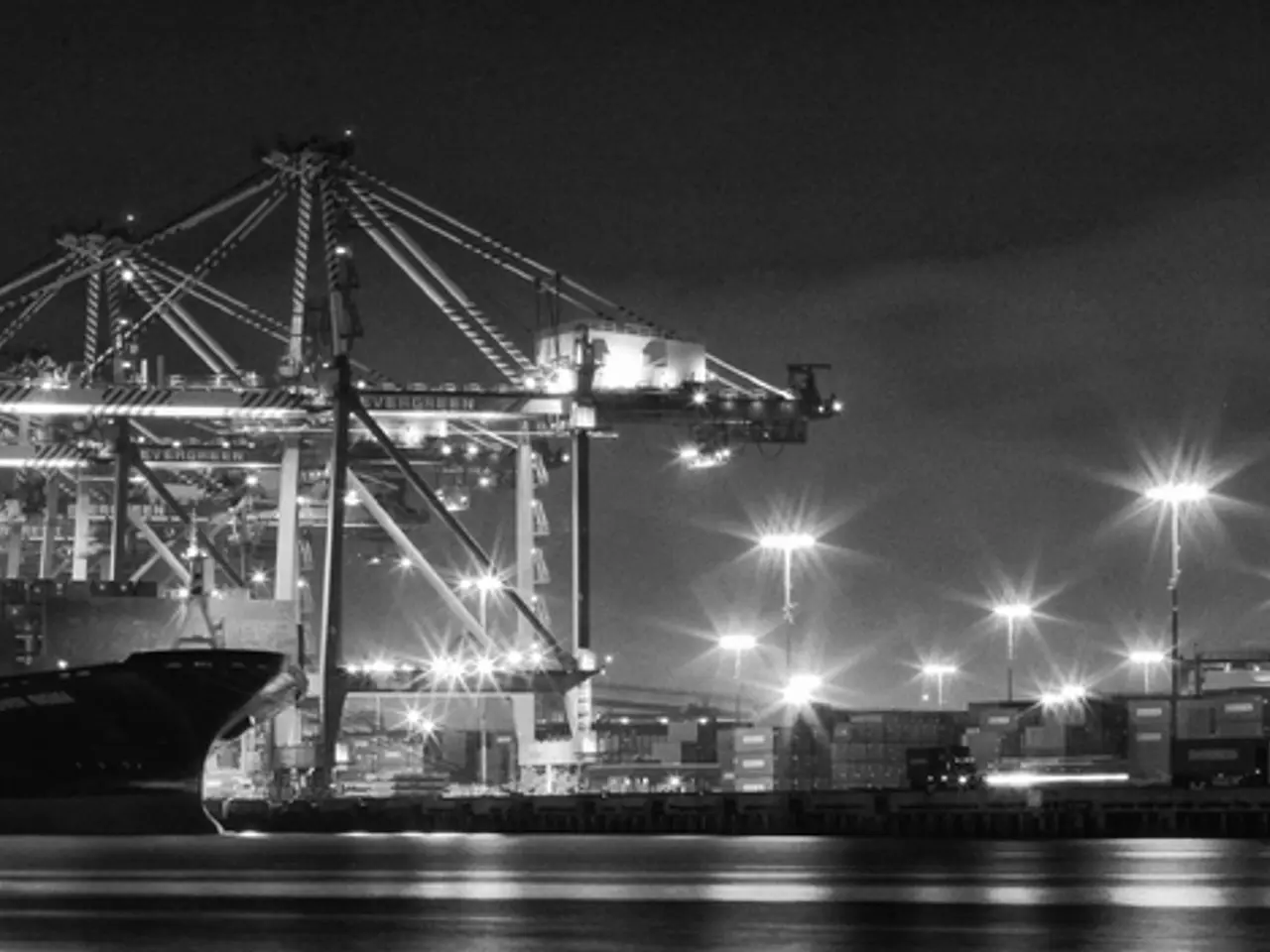
Potential changes to US shipbuilding regulations may provide a boost for MASGA's endeavors
In the midst of a growing competition in the global shipbuilding market, Korean shipbuilders are positioning themselves to gain an edge over their Japanese and Indian rivals. This strategic move comes as the United States prepares to open its warship market to overseas shipyards in allied countries.
One of the key changes in the bill under consideration would waive the current 50 percent import duty on major vessel modifications, as long as the work is performed at shipyards in US-allied countries such as South Korea. This move is expected to significantly reduce costs and increase the competitiveness of Korean shipbuilders in the US market.
Lee So-young, a military judge, has suggested that the Korean government and companies should proactively support efforts to amend US laws regarding naval shipbuilding. According to Lee, this could provide a unique opportunity for Korea's shipbuilding industry to help maintain and strengthen the US Navy.
However, stakeholders in the US shipbuilding sector oppose outsourcing the construction of US naval warships, citing it as a threat to the US shipbuilding industry. Despite this opposition, US lawmakers have proposed the Merchant Marine Allies Partnership bill to expand shipbuilding ties with US allies.
The collaboration aims to strengthen US and allied naval capabilities. A new working-level group will be set up to discuss the specifics of the legal changes further. This group will work towards easing restrictive regulations like the Byrnes-Tollefson Act, which currently requires US warships to be built exclusively in US shipyards.
The United States and Korea are working together to revise century-old shipmaking laws. The Ensuring Naval Readiness Act, presented by US Sen. Mike Lee of Utah in February this year, aims to authorize exceptions to the prohibition on the construction of US naval fleets at foreign shipyards. This act, along with the Merchant Marine Allies Partnership bill, could pave the way for Korean shipyards to produce block modules for US ships that can be assembled in American yards.
In a recent meeting, Vice Minister Kang Hwan-seug and Jason Potter discussed cooperation in naval shipbuilding and maintenance, repair, and overhaul services. The meeting also touched upon the need to revitalize the American shipbuilding sector, with Seoul pledging a $150 billion shipbuilding cooperation fund for Korean shipbuilders to invest in the US and support the American shipbuilding sector's revitalization.
The legislation would allow ships built in allied countries or operated by companies based there to take part in US domestic trade. This move is seen as one of the key factors that led to a tariff deal between Korea and the US late last month.
The combination of legislative proposals, bilateral discussions involving the US Navy and South Korean Defense Acquisition Program Administration (DAPA), and executive actions reflects a coordinated push to reform historically restrictive shipbuilding laws to boost naval strength and allied collaboration.
In a recent article, Lee emphasized the need for Korea to foster experts on US law and get advice on what steps to take during each phase of legislation. This strategic move could ensure that Korea's shipbuilding industry remains at the forefront of the global competition and continues to play a significant role in strengthening US naval capabilities.
In conclusion, efforts to revise U.S. shipbuilding laws to strengthen naval capabilities and increase collaboration with allies, particularly South Korea, are actively underway. These developments signal ongoing, concrete efforts to facilitate practical collaboration and boost naval strength in the coming years.
- The strategic move suggested by Lee So-young, a military judge, encourages the Korean government and companies to support efforts to amend US laws regarding naval shipbuilding, potentially positioning Korean shipbuilders to play a significant role in maintaining and strengthening the US Navy.
- The collaboration between the United States and Korea, as signified by the Merchant Marine Allies Partnership bill and the Ensuring Naval Readiness Act, could lead to Korean shipyards producing block modules for US ships, thereby enhancing US naval capabilities and increasing global competition in the shipbuilding market.




