
Potential Differences Emerge in Air Force-Related Matters as House and Senate Progress Defense Bills independently
Senate's Defense Bill Bolsters Aircraft Purchases and Funding for Key Programs
The Senate Armed Services Committee has released its version of the 2026 National Defense Authorization Act (NDAA), proposing a significant boost to the Air Force and Space Force's budget. The bill, which is likely to be around $46 billion higher when accounting for troop pay and other personnel funding, aims to bolster aircraft purchases and research-and-development programs.
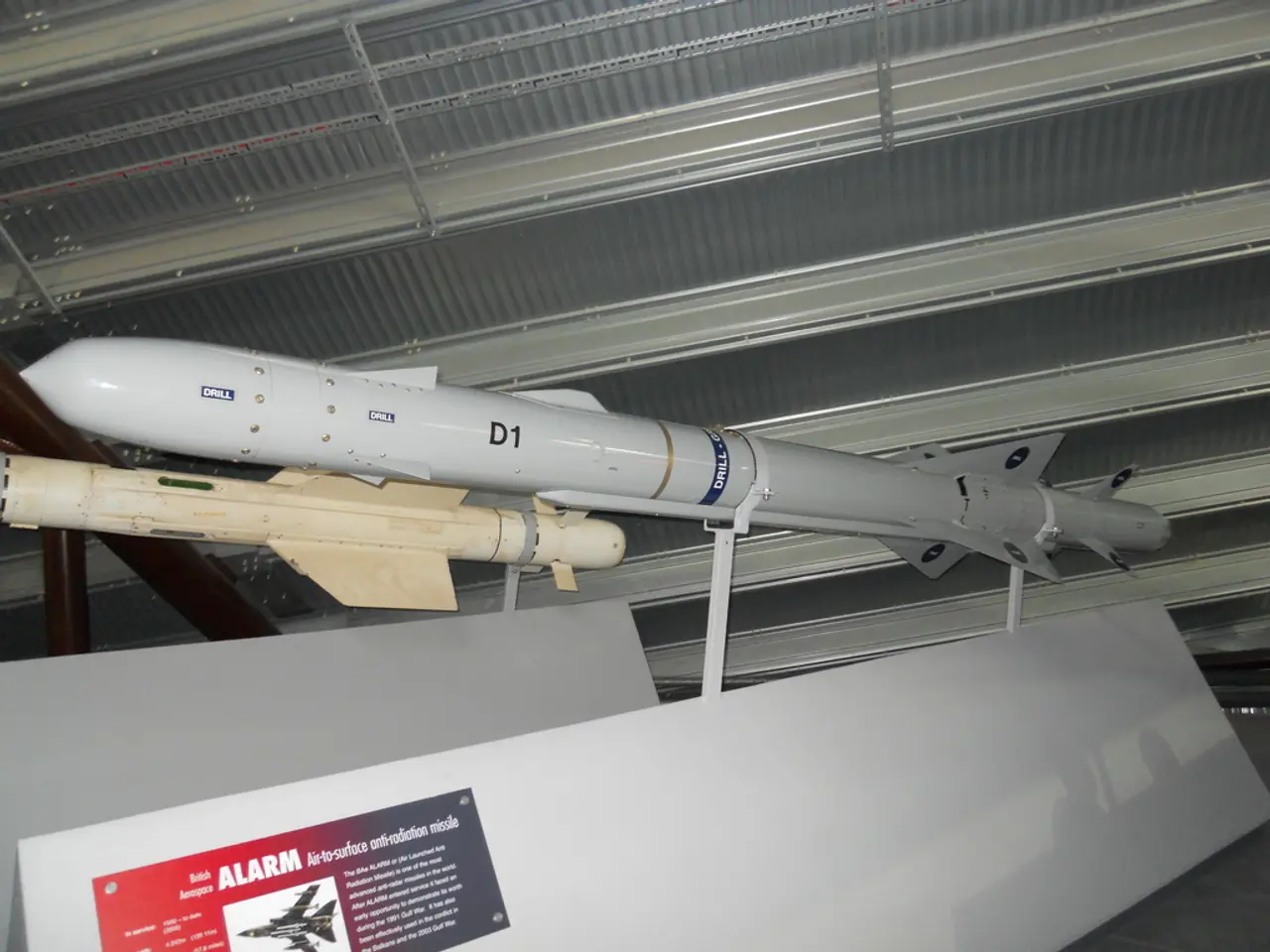
Air Force's Joint Air-to-Surface Standoff Missile Procurement
If the Senate's bill is passed, the Air Force's Joint Air-to-Surface Standoff Missile procurement could receive an additional $322 million.
B-21 Raider and E-7 Wedgetail Funding
The Senate endorses the B-21 Raider's $5.7 billion base budget request for 2026, on top of the $4.5 billion the program received earlier this month to speed up production. The bill includes $700 million for E-7 Wedgetail prototyping, bringing next year's funding to almost $900 million total.
Navy E-2D Hawkeye Planes and Other Cuts
However, the bill slashes $1.5 billion that the Pentagon sought to purchase more Navy E-2D Hawkeye planes for the airborne target-tracking mission.
F-47 Development and Collaborative Combat Aircraft Program
The Senate bill authorizes another $500 million for F-47 development and adds $678 million to the Collaborative Combat Aircraft program.
Sentinel Missiles and Air Force Global Strike Command
The Senate bill dictates that Sentinel missiles must be operational by October 2033, and that the Air Force should have no fewer than 400 Intercontinental Ballistic Missiles (ICBMs) on alert at any given time. The bill also codifies the role of Air Force Global Strike Command in managing the service's nuclear enterprise.
Retirement of Certain Aircraft
Congress is moving to block or significantly limit the retirements of certain Air Force and Space Force workhorse planes, as outlined in the 2026 defense policy bill. The bill prohibits the Air Force from retiring A-10 aircraft below 103 planes in FY 2026, ensuring a partial continuation of the fleet rather than full retirement. The House panel also moved to save the E-7 Wedgetail program from cancellation.
Transition of Bomber Force and Long-Range Standoff Weapon
The Senate bill requires the Air Force to provide details on how it will transition its bomber force to a mix of planes that carry nuclear and conventional weapons, including at least 100 B-21s, no later than 180 days after the defense policy bill is enacted. The bill adds $149 million to accelerate the design of the Air Force's new nuclear-tipped Long-Range Standoff Weapon, as well as to create a conventional version of the missile.
Sentinel Program Funding
The Senate's proposed defense spending is 6 percent larger for development and 12 percent bigger for procurement compared to the House's draft. The bill authorizes an additional $2 billion for the Sentinel program, bringing the total funding to $4.6 billion next year.
References: [1] Breaking Defense, 2022. link [2] Defense News, 2022. link [3] Military Times, 2022. link [4] The Hill, 2022. link [5] Politico, 2022. link
- The Senate's Defense Bill proposes a substantial increase in funding for the Air Force and Space Force, boosting aircraft purchases and research-and-development programs.
- If passed, the bill could provide an additional $322 million for the Air Force's Joint Air-to-Surface Standoff Missile procurement.
- The B-21 Raider's base budget request for 2026 is endorsed by the Senate, and includes a $5.7 billion allocation, on top of earlier funding for speedier production.
- The Senate bill includes $700 million for E-7 Wedgetail prototyping, bringing next year's funding to almost $900 million in total.
- The bill slashes $1.5 billion from the Pentagon's proposed budget for purchasing more Navy E-2D Hawkeye planes.
- The Senate bill mandates that Sentinel missiles must be operational by October 2033, and requires the Air Force to maintain a minimum of 400 Intercontinental Ballistic Missiles (ICBMs) on alert at any given time.




