
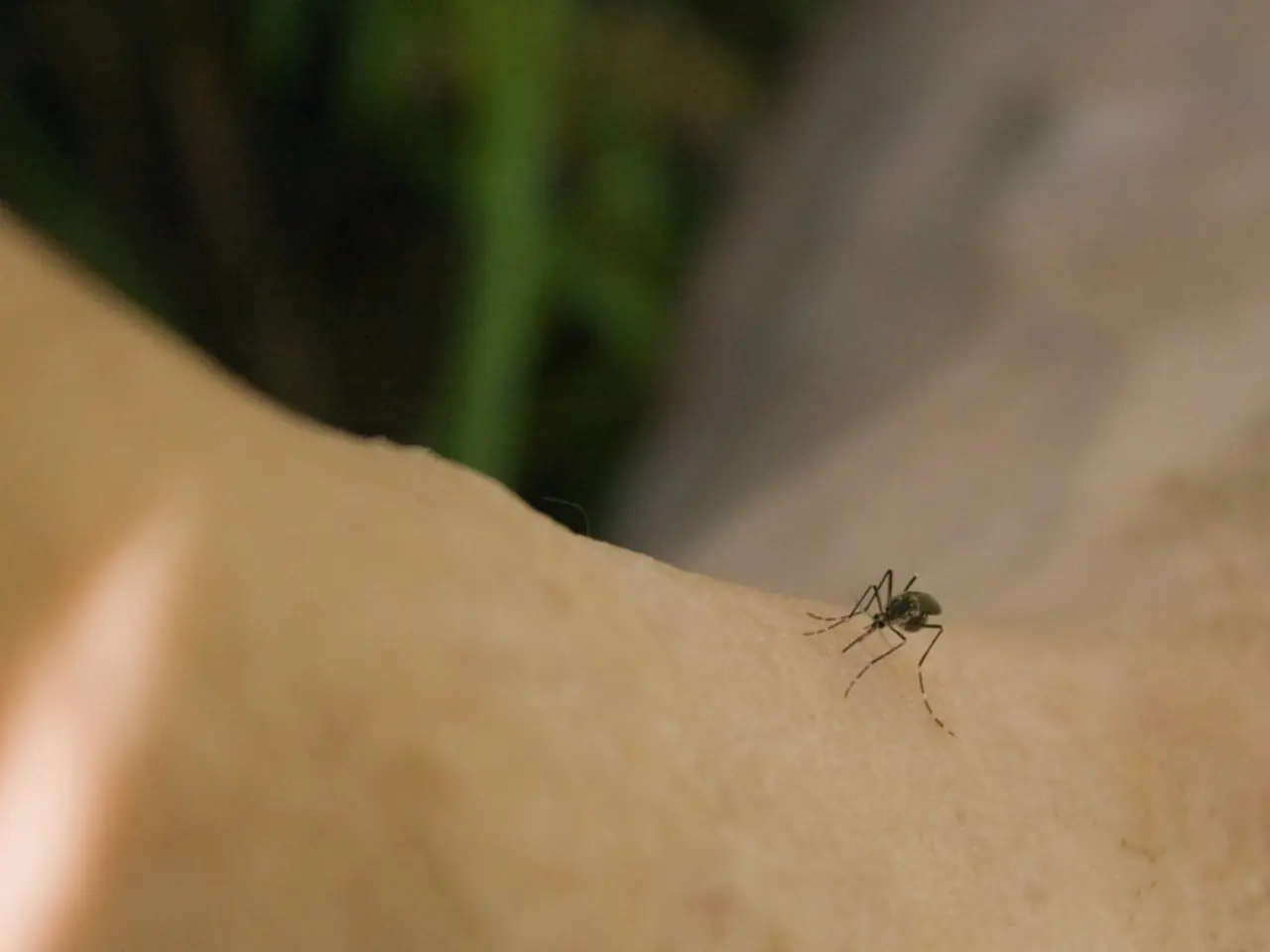
Researchers have uncovered the reason behind our persistent encounters with mosquitoes
In the world of insects, mosquitoes are notorious for their ability to disrupt our outdoor activities and spread deadly diseases. A team of researchers at the California Institute of Technology (Caltech) has made a groundbreaking discovery that could change the way we approach mosquito control.
The study, conducted in controlled wind tunnel experiments, has revealed the intricate methods mosquitoes use to find human hosts. Mosquitoes are adaptive, multi-sensory hunters, relying on a three-sensor GPS system that includes olfactory, visual, and thermal detection.
The first step in mosquito hunting is olfactory detection, where mosquitoes can detect carbon dioxide (CO2) that humans exhale from up to 164 feet away. CO2 acts as a trigger, activating their other senses and initiating the hunt. Once they get closer, they use their olfactory receptors to identify specific substances in human sweat and skin odors, such as lactic acid, carboxylic acids, uric acid, and ammonia. Finally, they detect body heat to home in on the host for biting.
This multi-modal sensory approach enables mosquitoes to efficiently find and select human hosts. The prioritized sequence is carbon dioxide (long-range detection), body odor and sweat chemical cues (mid-range, more specific recognition), and body heat (close-range location before biting).
Understanding this process could lead to smarter repellents, better traps, and more informed behavior. For instance, wearing light-colored, loose-fitting clothing can help reduce visibility to mosquitoes and decrease the contrast they use to visually lock onto humans. Devices that disperse heat or confuse thermal sensors could be the next frontier in repellent technology.
However, it's important to note that while these measures can reduce the risk of mosquito bites, they cannot eliminate it completely. Mosquitoes are almost impossible to fully evade. The Caltech team suggests that understanding how mosquitoes think is more important than trying to block them.
Vaccines for mosquito-borne diseases like malaria, Zika, and dengue remain our best shot at long-term protection against mosquitoes. Until then, staying informed about mosquito behavior and adapting our strategies accordingly can help us better navigate the summer months.
- The groundbreaking discovery by the Caltech team in the realm of mosquito control involves harnessing technology to develop devices that confuse thermal sensors, aimed at disrupting the mosquitoes' multi-modal sensory approach and aiding in the creation of more effective repellent technology.
- In the ongoing battle against mosquitoes, understanding the intricate science of mosquito hunting — their reliance on carbon dioxide detection, odor and sweat chemical cues, and body heat — can help the development of smart vaccines for mosquito-borne diseases, such as malaria, Zika, and dengue, offering long-term protection against these deadly medical-conditions.




