
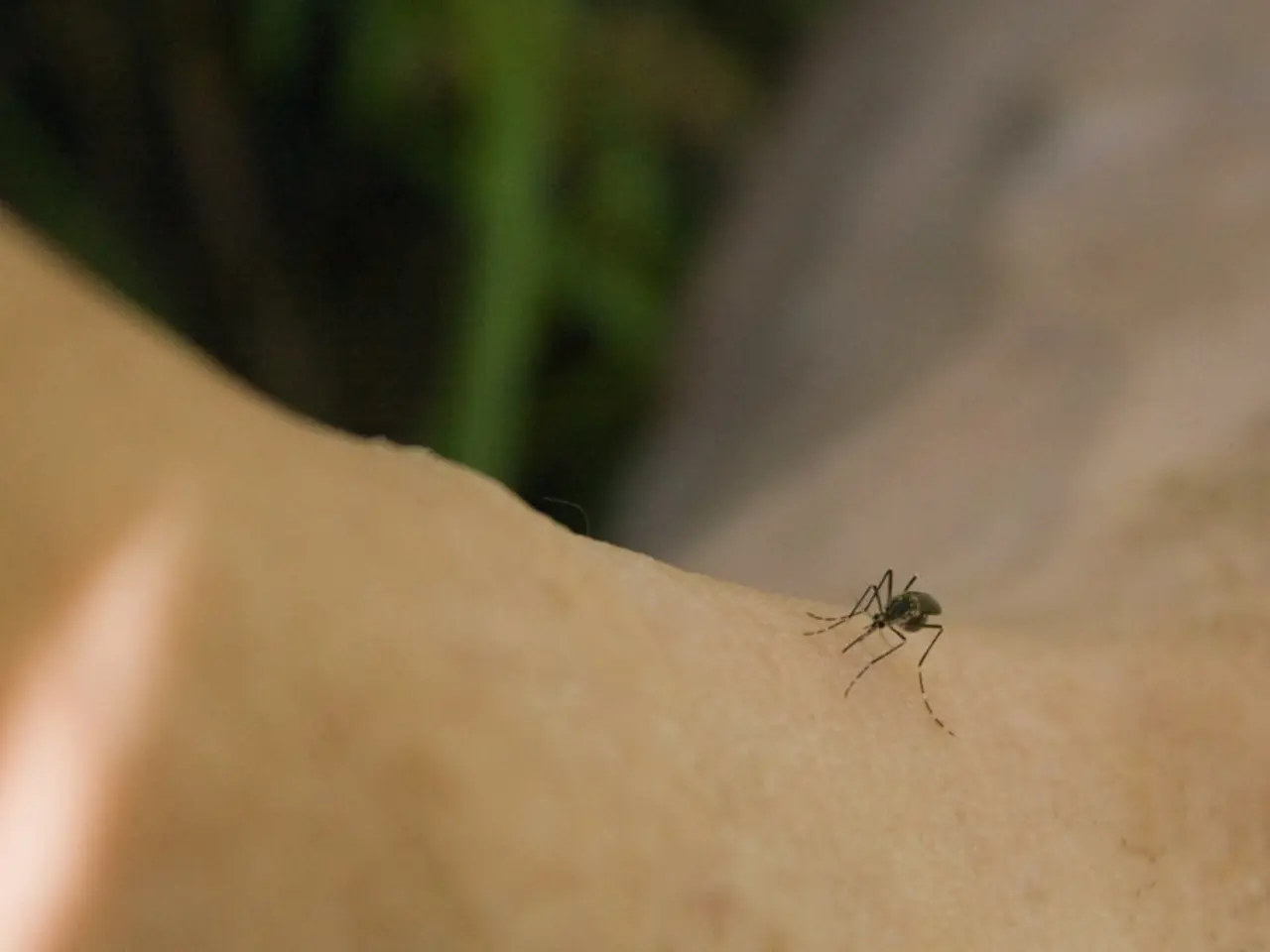
Researchers Have Uncovered the Reason Why We Continually Encounter Mosquitoes
In a groundbreaking study conducted by a team at the California Institute of Technology (Caltech), the hunting behaviour of mosquitoes has been unravelled, providing insights that could revolutionise our approach to repelling these pesky insects.
The research reveals that mosquitoes have a fail-proof tracking system, using a three-sensor GPS system - smell, visual cues, and thermal detection.
CO2 detection serves as the primary long-range cue for mosquitoes. They sense carbon dioxide exhaled by humans from a considerable distance, which alerts and guides them towards a potential host. This initial detection is critical because CO2 is emitted by all humans, signalling the presence of a viable blood source.
Once guided by smell, mosquitoes prioritise visual cues only after detecting CO2. Mosquitoes' compound eyes are sensitive to specific light wavelengths, especially in the ultraviolet and green spectrum, which helps them detect contrast and shapes associated with hosts. Visual information is particularly important when mosquitoes are within closer range and navigating among environmental clutter.
When near the host, heat detection becomes critical. Mosquitoes sense thermal radiation emitted by warm-blooded hosts, enabling them to find exposed skin areas for feeding. Heat acts as a fine-scale cue confirming host presence and guiding landing and biting behaviour.
The integration process is sequential and complementary: CO2 detection activates host-seeking, visual cues guide approach and orientation, and heat detection directs final contact. Together, these modalities allow female mosquitoes to efficiently locate and select human hosts for blood meals required for reproduction.
The study also found that mosquitoes can consistently choose warmer objects, regardless of CO2 presence. When within striking distance, mosquitoes switch to thermal detection, sensing heat differences to locate their prey.
Understanding how mosquitoes think is more effective than attempting to block them. Wearing light-colored, loose-fitting clothing reduces the contrast mosquitoes use to visually lock onto a person. Devices that disperse heat or confuse thermal sensors could be the next frontier in repellent tech.
In the meantime, smarter repellents, better traps, and more informed behaviour can reduce the risk of mosquito bites but not eliminate it completely. The research focused on the hunting behaviour of female mosquitoes, which are the ones that bite.
This study could have implications for everything from autonomous drones to AI sensory networks. As we continue to learn about mosquitoes' sensory strategies, we can develop more effective ways to evade these biting insects and protect ourselves from mosquito-borne diseases like malaria, Zika, and dengue. Vaccines for these diseases remain our best shot at long-term protection.
- The study at Caltech reveals that mosquitoes use a three-sensor system including CO2 detection, visual cues, and heat detection to find humans, suggesting potential for advancements in repellent technology.
- As mosquitoes prioritize CO2 detection for initial guidance, wearing light, loose clothing and using devices that disperse heat or confuse thermal sensors could be effective strategies to evade mosquitoes and reduce the risk of mosquito-borne diseases.




