
Sugar market anticipates surge due to potential increase in American demand
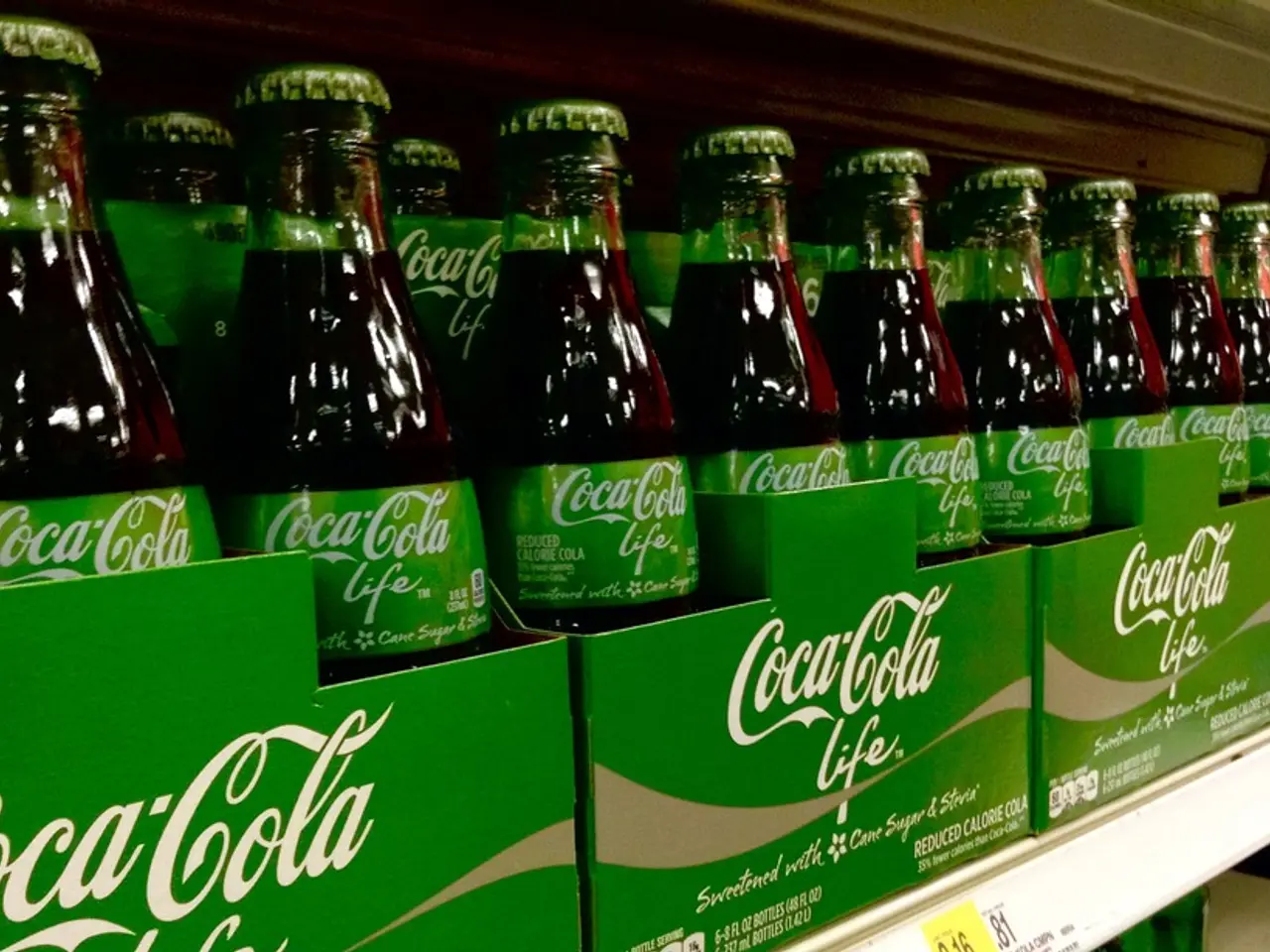
In a significant move, President Donald Trump's announcement that Coca-Cola will switch from using high-fructose corn syrup (HFCS) to cane sugar in its U.S. products is set to have a profound impact on the U.S. sugar market and global sugar prices.
**Impact on U.S. Sugar Demand:**
Coca-Cola's decision to use real cane sugar in the U.S. market is expected to cause a significant increase in domestic demand for cane sugar. Since 1985, HFCS has been the primary sweetener used by Coca-Cola in the U.S., and this shift will require sourcing more cane sugar within or imported to the U.S. [1][3]
The announcement has already caused concern among investors, particularly for companies producing HFCS, such as Archer-Daniels-Midland and Ingredion, whose stock prices dropped notably after the news. This suggests market anticipation of lower demand for HFCS and higher demand for cane sugar domestically. [2]
**Impact on Global Sugar Prices:**
An increase in U.S. demand for cane sugar, a commodity traded globally, could contribute to upward pressure on global sugar prices, especially if the U.S. imports more cane sugar or competes with other markets already sourcing cane sugar.
Given that Coca-Cola already uses cane sugar in markets like Mexico, the UK, Africa, and the Middle East, expanding this to the much larger U.S. market could increase sugar demand worldwide, possibly tightening supply and pushing up prices. [1]
**Global Sugar Market Updates:**
Meanwhile, reduced sugar production in Brazil has supported sugar prices. Brazil's 2024/25 sugar production fell 3.4% y/y due to lower sugarcane yields caused by drought and excessive heat. [4]
London sugar slid to a nearly 4-year low on expectations for a sugar surplus in 2025/26. However, October NY world sugar #11 (SBV25) closed up 1.09% on Thursday, and October London ICE white sugar #5 (SWV25) closed up 1.15% on the same day. [5]
Thailand, the second-largest exporter of sugar, saw its 2024/25 sugar production rise by 14% y/y to 10.00 MMT, making it the world's third-largest sugar producer. Czarnikow projected a 7.5 MMT global sugar surplus for the 2025/26 season. [6]
The USDA forecasted that India's 2025/26 sugar production will rise +25% y/y to 35.3 MMT, while Thailand's 2025/26 sugar production is predicted to climb +2% y/y to 10.3 MMT. [7]
Sugar prices have retreated over the past three months, with NY sugar reaching a 4.25-year low earlier this month. [8]
This news underscores the dynamic nature of the global sugar market, with shifts in demand and production patterns having far-reaching implications for prices and market players. As Coca-Cola's decision unfolds, it will be interesting to see how these trends evolve and how the market responds.
Technology Involvement:
The shift from high-fructose corn syrup (HFCS) to cane sugar in Coca-Cola's U.S. products might necessitate advancements in processing technology to accommodate the larger volumes of cane sugar, ensuring efficient production and consistent quality.
Global Competitive Landscape:
Coca-Cola's expansion of using cane sugar, a common ingredient in numerous beverages worldwide, could inspire other companies to follow suit, leveraging technology to develop alternatives to HFCS, potentially reshaping the global beverage industry landscape.




