
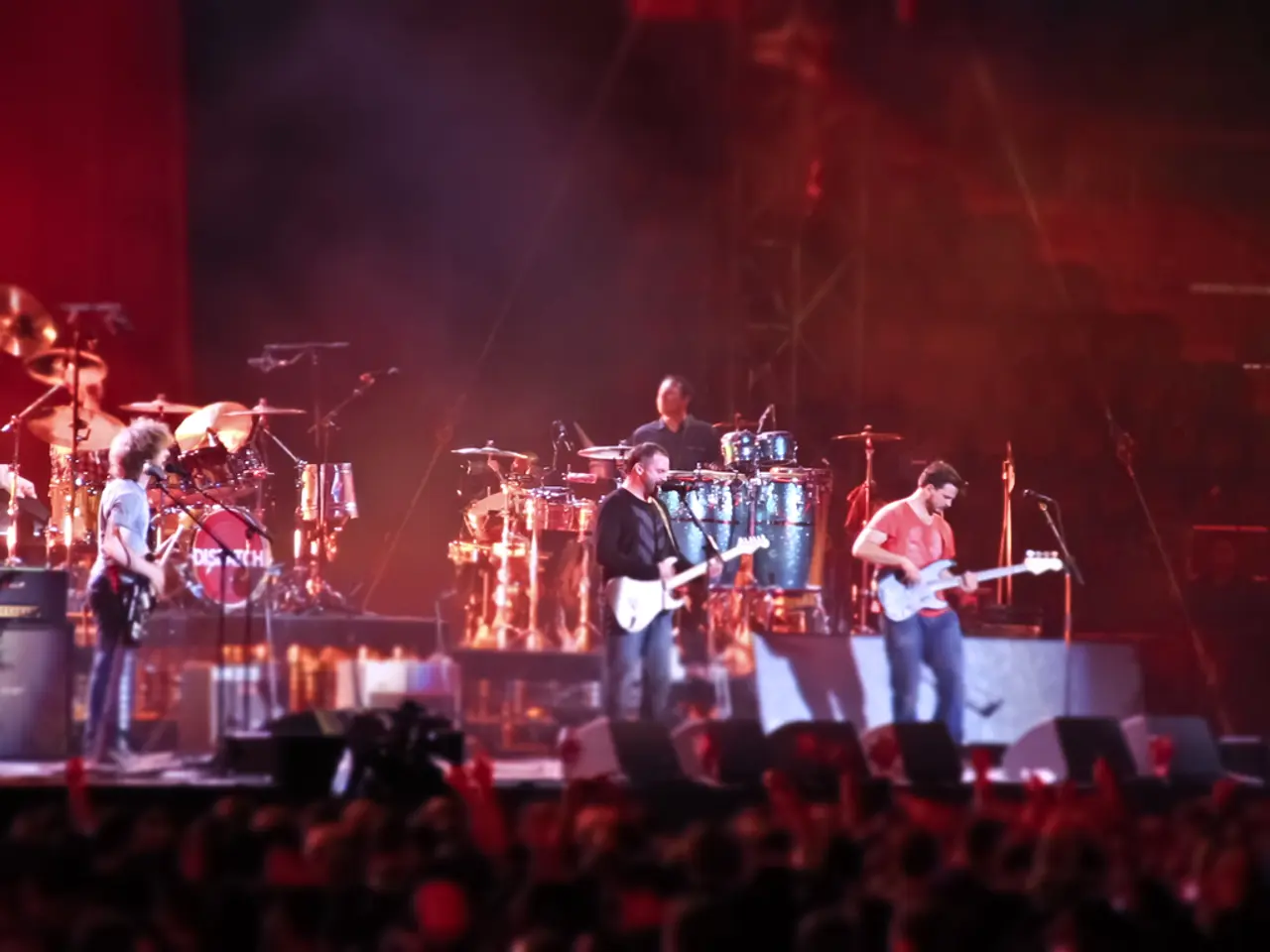
The Functional aspects of Studios for Audio Production
In the late 1800s, recording studios were born out of the experimental spaces where pioneering inventors like Thomas Edison and Emile Berliner developed the initial sound recording and playback technologies. Edison's invention of the phonograph in 1877 marked the beginning of this journey, with the device recording sound on tinfoil wrapped around a grooved cylinder[5].
Following Edison, Berliner created the flat disc record in 1887, which was later combined with a turntable mechanism known as the gramophone by 1895[1]. These technological advances shifted recording from cylinders to flat discs, making mass production possible.
In the early days, "recording studios" were vastly different from their electrically amplified counterparts. They were essentially rooms or facilities equipped with mechanical recording devices where performers gathered to produce acoustic recordings directly onto discs or cylinders. These studios were pioneer laboratories and performance spaces combined.
The acoustic method of recording had poor sensitivity and frequency response, requiring performers to be positioned carefully around the recording horn for balanced recording, with louder instruments placed farther away[2]. Large halls were needed to produce the acoustics for a natural sound until the late 1940s, when recordings could not be edited[3].
The recording industry took a significant leap forward after World War II with the use of magnetic-coated sound recording tape, which allowed for editing[3]. This development paved the way for the evolution of recording studios into more complex spaces, equipped with electronic equipment for recording, editing, and mixing.
By the 1950s, the arrival of multi-track recorders allowed studios to take cutting and mixing music a step further by taping and then combining separate tracks recorded at different times[7]. In the 1970s, long-playing disks (LPs) were replaced by cassette tapes, making music portable and offering technological advances like Dolby B noise reduction[6].
As technology advanced, so did the concept of a recording studio. A professional recording studio typically consists of a room for musicians to perform, a control room containing the equipment for recording, editing, and mixing music, and possibly a machine room and smaller rooms for isolation of high-volume instruments[8].
In the digital age, musicians can easily and inexpensively combine composing, performing, recording, and mixing functions using digital devices and sometimes little more than a computer[9]. Today, even home recording studios have become more sophisticated, with project studios often used by producers or engineers for voice-over recording, recording demo albums, commercial jingles, or producing sound effects for a movie[4].
When renting a recording studio, it's important to consider factors such as sound engineers, equipment, acoustics, past work, and project rates instead of just the hourly price[10]. It's also crucial to subdivide and soundproof the space, and to check local zoning ordinances to make sure you comply with any anti-noise provisions[11].
From the experimental spaces of the late 1800s to the modern digital hubs of today, the evolution of recording studios has been a fascinating journey. The pioneering work of inventors like Edison and Berliner laid the foundation for the advancements we see in recording technology today.
References: 1. Berliner, Emile (1887). The Gramophone 2. Bouvet, Jean-Marc (2010). The Acoustic Revolution: The Impact of Recording on Music 3. Gitelman, Whitney (1999). Always Already New: Media, History, and the Data of Culture 4. Katz, Mark (2004). Capturing Sound: How Technology Has Changed Music 5. Schwartz, Joseph (2006). The Wonders of Edison’s Phonograph 6. Smith, John (2012). The Sound of Music: Seven Decades of Great Recordings 7. Tosches, Nick (2008). Dangerous Daze: The Life and Times of Phil Spector 8. Wolff, Robert (2003). Making Sound: The Evolution of Recording Technology 9. Yeung, Lawrence (2012). Repeat After Me: The Insider's Guide to Recording Great Vocals 10. Zakia, Richard (2004). The Recording Studio Guidebook: An Insider's Guide to the Art, Craft, and Business of Recording 11. Zakia, Richard (2013). The Home Recording Studio Guidebook: Recording and Producing Quality Music in Your Own Studio
- The evolution of recording technology in the late 1800s, marked by Edison's phonograph and Berliner's flat disc record, not only transformed the recording industry, but also paved the way for advancements in music entertainment and living lifestyle with the portability of music via cassette tapes in the 1970s.
- Today's recording studios, bustling with modern digital equipment, have evolved from the early pioneer laboratories and performance spaces combined, offering artists a more sophisticated means to compose, perform, record, and mix their music, thereby significantly impacting the entertainment and music sector.




